Files and Rasps
Files, Grinding and Deburring
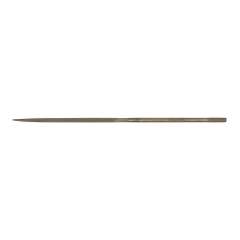
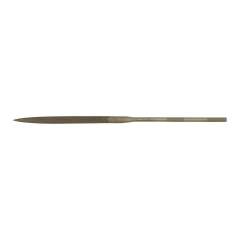
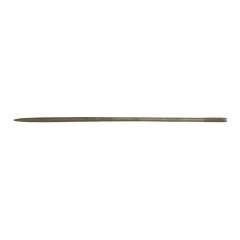
Files and rasps remove material by cutting and handle deburring, reworking and fitting of metal, plastic and printed circuit board edges in electronics and industrial workshops. Designation, cross section and cut number follow DIN 8349 and ISO 5744: cut numbers run from 00 to 5, the higher the number, the finer the tooth pattern and the smoother the resulting surface. Precision engineering relies on needle files with lengths from 100 to 200 mm, represented here at 140 mm length with 38 cuts per centimetre. Scrapers, contact files and rasp burrs for handheld grinders complete the range. The category holds 56 articles, with Bahco, Bernstein and Proxxon accounting for the largest shares.
| Shape | Length | Cut | Application |
|---|---|---|---|
| Needle file | 140 mm | 38 cuts per cm | precision engineering, shaping small parts |
| Warding file | 100 mm | 22 cuts per cm | reworking holes, grooves and slots |
| Contact file | 150 mm | fine cut | cleaning oxidised contact faces |
| Rasp burr | 3.2 to 19 mm | steel pin surface | plastics and soft metals in handheld drives |
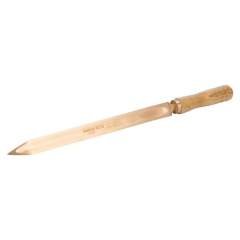
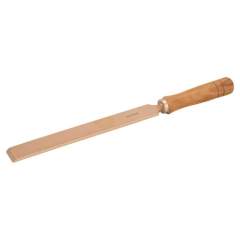
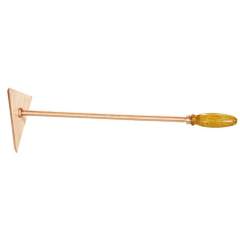
| Beryllium copper scraper | 20 to 470 mm | blade instead of cut | non-sparking removal of deposits |
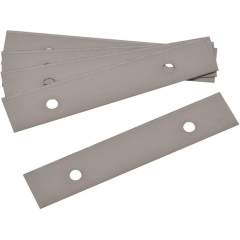
Typical applications: deburring milled and sawn metal parts in pre-assembly; reworking circuit board edges and enclosure cut-outs; cleaning oxidised contact and relay surfaces with the contact file; correcting the shape of small parts in prototyping and precision engineering; removing adhesive, solder and paint residues with scrapers; non-sparking maintenance in potentially explosive areas.