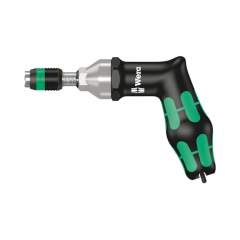
Torque Screwdrivers
Torque Tools
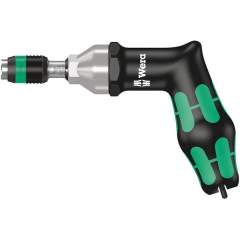
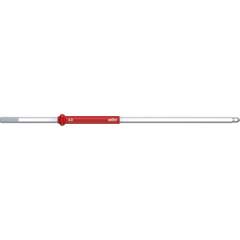
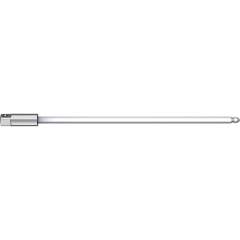
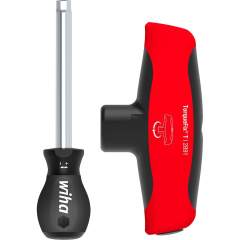
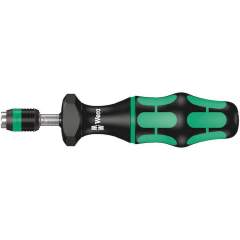
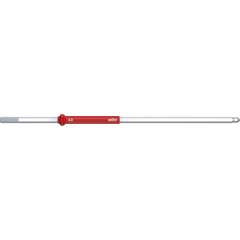
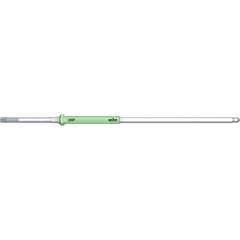
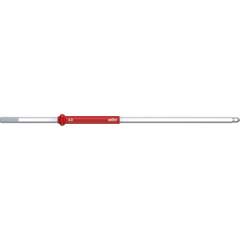
Torque screwdrivers apply a specified tightening torque in the low Nm range and keep screw joints on boards, terminals and housings reproducible. The governing standard is DIN EN ISO 6789, which separates indicating tools (type I) from setting tools that release (type II) and limits the permissible deviation to ±6 % up to 10 Nm and ±4 % above. Accuracy only holds within the usable range of 20 to 100 % of full scale, so the measuring range is the first selection criterion, followed by blade holder, drive profile and handle form. The range holds 177 items, mainly from Wiha and Wera, complemented by Lindström, Bernstein and Bahco.
| Characteristic | Type I, indicating | Type II, releasing |
|---|---|---|
| Operating principle | value read off while tightening | tool releases at the preset value |
| Permissible deviation up to 10 Nm | ±6 % | ±6 % |
| Permissible deviation above 10 Nm | ±4 % | ±4 % |
| Usable range | 20 to 100 % of full scale | 20 to 100 % of full scale |
| Recalibration | after one year | after 5000 operations or one year |
Typical applications: board and assembly work with a prescribed tightening torque; terminals and connectors in control technology; housing screws in plastic parts that will not tolerate overtightening; test and measurement work with documented tightening; series assembly with a consistent result; service work on devices with a manufacturer torque specification.