A1-ESD
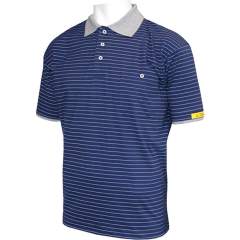
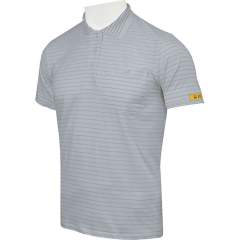
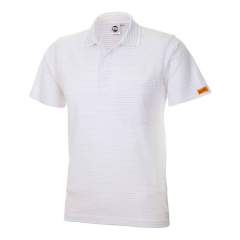
ESD polo shirt short sleeve white, 180 gsm piqué with conductive yarn
Item M200-180-2
As low as
€35.55
Images are examples, some edited with AI. The technical data are authoritative. AI notice
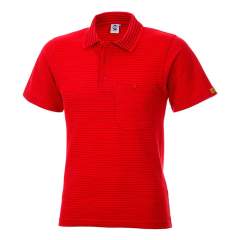
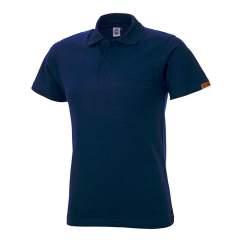
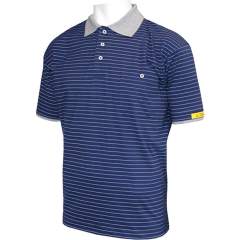
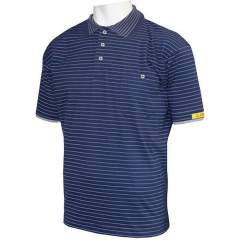
Short sleeve polo in black 180 gsm piqué, 96 % cotton with 4 % conductive yarn. Conductive rib knit collar, three button placket, left chest pocket and an ESD logo on the left sleeve. STFI measured a surface resistance of 10⁵ to 10⁸ ohms, and the reactive dye keeps the black deep through industrial laundering.
Anyone running an EPA has to control personnel dissipation as carefully as flooring, chairs and work surfaces. Around 100 volts is enough to damage a sensitive semiconductor structure for good, and every step in miniaturisation lowers that threshold further. Garments cover one defined part of the job: they keep the wearer's charge on a controlled path instead of on a private fleece pullover.
Black is the colour for benches where something rubs off. Flux residue at the iron, grease from mechanical assembly, toner dust in device service, cleaning alcohol carrying dissolved deposits. Dark piqué hides all of it through a full shift, so a technician who started at six still looks presentable at the customer site after lunch.
The black stays black rather than fading to grey after twenty washes because the fabric is reactive dyed. The dye forms a chemical bond with the cotton fibre instead of merely sitting on it.
The knit is compact cotton spun on ring spinning machines. That is where the smooth surface comes from: ring spun yarn has fewer protruding fibre ends than rotor yarn, sheds less lint and holds its shape instead of distorting at collar and hem after the third wash. Ninety six per cent of that cotton is joined by 4 % conductive yarn knitted straight into the fabric.
The piqué structure forms a fine waffle that holds air between skin and cloth. At 180 gsm the result has more substance than a light jersey but does not lie flat against the body at a warm workstation. Cotton absorbs moisture rather than leaving it on the surface, and it smells markedly less sharp at the end of a shift than a polyester knit.
The collar is not an applied strip but a rib knit made from conductive yarn. It follows the neck, springs back after being opened and does not lose shape while the shirt waits in the laundry basket. The three button placket opens far enough to pull the polo over the head without stretching the collar, and closes far enough for a customer meeting.
Inside, a colour matched neck tape finishes the shoulder seam. It stops the neckline from widening as the shirt is pulled on and off and lifts the seam away from the nape, which matters on a shift spent leaning over a microscope. The ESD logo sits on the left sleeve, the patch pocket on the left chest.
The conductive yarn is a silver yarn processed in a method developed specifically for this fabric. What matters for purchasing is the consequence: dissipation belongs to the fibre inside the knit, not to a coating that thins out in the wash water. Conductivity is retained after repeated washing and wear.
That is the difference between a shirt that measures correctly in its first year and one that still measures correctly in its third. Where personnel garments are checked regularly as part of the EPA programme, the interval between rejection and replacement grows noticeably longer.
The polo runs in twelve sizes from 3XS to 6XL, which covers a whole department from a slim inspector to a colleague in an outsize fit without splitting the team across two different cuts. Colour, cut and handle stay identical across the whole run, which matters when a second batch is ordered a year later.
The binding size chart is available as a PDF in the Downloads tab of this product page. Before a first rollout it pays to try a sample in M and in L and to scale the order from there. A polo that pulls across the shoulders rides up over the bench and loses skin contact at the neck, which is exactly where the collar is supposed to work.
Black is the pragmatic choice for rework, repair and field service. Solder fume residue, flux spatter, toner and lubricant barely show on dark piqué, and a shirt that still looks clean at midday gets worn on instead of swapped. In plants where white garments are reserved for cleanroom adjacent areas, black also works as a plain visual separation between zones.
The polo is built for commercial laundering. Ring spun yarn and the piqué structure keep collar and hem in shape, while reactive dyeing holds the colour through frequent wash cycles. The conductivity of the conductive yarn is retained over many washing and wearing cycles. The binding care instructions are on the sewn in label.
The fabric takes print up to 160 °C and suits embroidery, with a sample print recommended first. Decoration is carried out in Germany. Sleeves with conductive knitted cuffs, a contrast execution, the long sleeve version with conductive rib cuffs and colours outside the catalogue are all available on request. Talk to us and we will quote.
STFI tested this polo for dissipation and surface resistance to DIN EN 61340-5-1:2016 and the test was passed. The measured value is 10⁵ to 10⁸ ohms at 23 +/- 1 °C and 25 +/- 5 % relative humidity. No testing or certification to any further ESD standard exists for this model, and none is claimed.
| Style | Polo shirt, short sleeve, three button placket |
|---|---|
| Colour | Black |
| Material | 96 % cotton, 4 % conductive yarn |
| Fabric weight | 180 gsm |
| Knit | Fine piqué from ring spun yarn |
| Dyeing | Reactive dyed |
| Collar | Conductive rib knit collar |
| Left chest pocket | |
| Neck tape | Colour matched |
| Marking | ESD logo on the left sleeve |
| Surface resistance | 10⁵ to 10⁸ ohms |
| Testing | DIN EN 61340-5-1:2016, tested by STFI |
| Test climate | 23 +/- 1 °C, 25 +/- 5 % relative humidity |
| Sizes | 3XS, 2XS, XS, S, M, L, XL, XXL, 3XL, 4XL, 5XL, 6XL |
| Customs tariff number | 6110.2091 |
| Brand | A1-ESD |
| Weight | 0.35 kg |
| Manufacturer | A1-ESD |
| GPSR manufacturer information | A1-ESD equipment GmbH. Keldersstr. 15, DE-42697 Solingen, www.esd.equipment |
| Condition of article | New |
| Article authenticity | Original product |
| Sales unit | 1 Stück |
| ESD version | ESD (antistatic) |
| Geschlecht | Unisex |
| Certification | IEC 61340-5-1 |
Send us the item number and your question. We clarify technical details directly with the manufacturer and usually reply on the next working day.