ESD Tools to IEC 61340-5-1
Tools
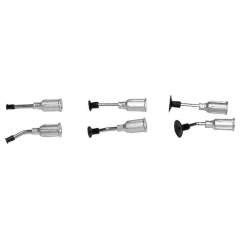
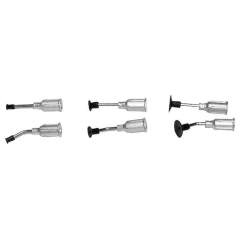
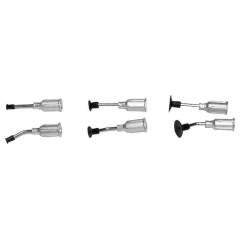
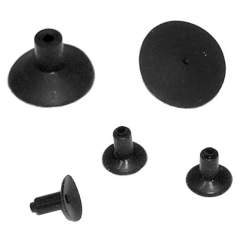
ESD tools to IEC 61340-5-1 are hand tools with dissipative handles and coatings for use inside an EPA, where they must not transfer charge to the component. This category groups every tool shape by that one property: pliers, screwdrivers, tweezers, cutting and assembly tools for electronics manufacturing, repair and test engineering. The resistance of the gripping surfaces lies between 10⁶ and 10⁹ Ω, so that charge drains in a controlled way instead of building up. The range holds 1179 items, with Bernstein, Lindström, C.K, Piergiacomi, Knipex and Wiha as the leading brands. An ESD tool protects the component, not the person: it is not approved for live working, which is covered by the VDE 1000 V tools to IEC 60900.
| Criterion | IEC 61340-5-1 (ESD) | IEC 60900 (VDE) |
|---|---|---|
| Protection target | the component, against discharge | the person, against electric shock |
| Electrical figure | resistance 10⁶ to 10⁹ Ω | each piece proof tested at 10,000 V, rated up to 1000 V AC and 1500 V DC |
| Marking | ESD symbol on the handle with the standard reference | double triangle with the 1000 V rating |
| Checks in service | resistance measurement per EPA test plan | visual check before every use, withdraw once the second colour layer shows |
| Live working | not permitted | permitted up to 1000 V AC |
Typical applications: SMT and THT assembly of boards carrying MOS and CMOS devices; rework and repair of assemblies at an EPA workstation; test and measurement laboratories with dissipative work surfaces; assembly of connectors, sensors and camera modules; service work on de-energised equipment; cleanroom ante-areas with an EPA requirement. Where live working is also involved, a version that meets IEC 61340-5-1 and IEC 60900 at the same time is required; two separate tools do not replace it.