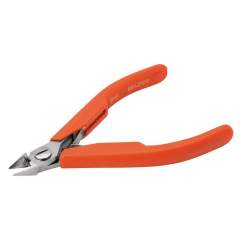
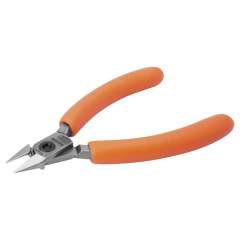
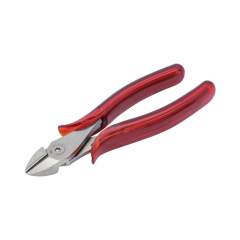
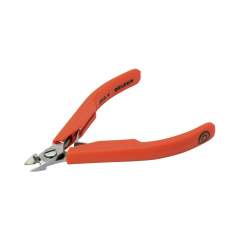
Diagonal Cutters
Pliers and Cutting Tools
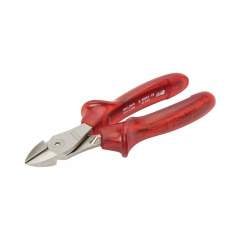
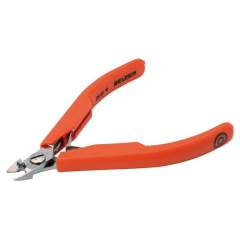
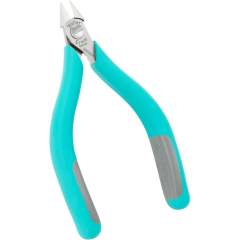
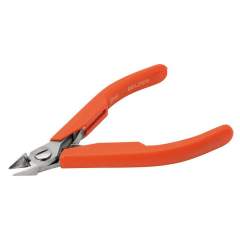
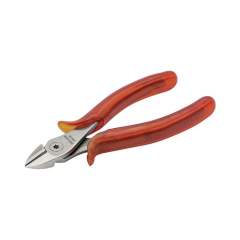
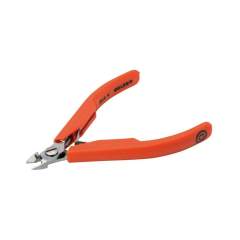
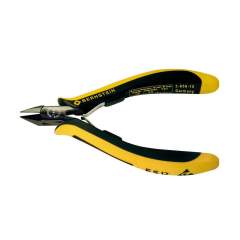
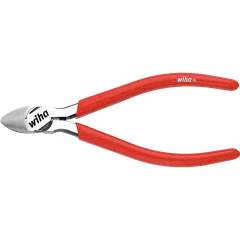
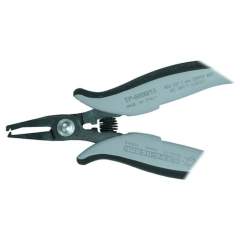
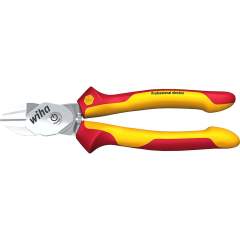
Diagonal cutters sever wire, component leads and cable ties across the tool axis and belong to the basic equipment of every electronics and electrical workstation. Design and testing follow DIN ISO 5749; the selection depends on the cutting edge form, head shape, overall length and the permissible cutting capacity for the given wire hardness. Versions with dissipative handle sleeves to IEC 61340-5-1 keep the resistance to ground between 10⁶ and 10⁹ Ω and prevent the tool from charging inside the EPA. VDE models to IEC 60900 are individually tested at 10 000 V and approved up to 1000 V AC, which is a different standard and a different purpose than ESD. The range covers 719 items, among them Knipex, Lindström, Weller, Piergiacomi and Wiha.
| Cutting edge form | Cut result | Typical use |
|---|---|---|
| Without bevel (flush) | flush cut at the component lead | populated boards, short lead ends |
| Small bevel | slight protrusion, more stable edge | mixed solid wire and stranded work |
| Full bevel | clear protrusion, long edge life | medium hard wire, assembly work |
| Switchable high performance edge | two stage leverage | hard wire at 200 mm overall length |
Typical applications: SMT and THT assembly where component leads are cut flush; cable assembly and stranded wire cutting in control cabinet production; repair and rework on boards inside the EPA; prototype and laboratory work on fine copper wire; work on live parts with VDE tested models up to 1000 V; maintenance with heavy duty cutters for hard wire.