
Bismuth Low-Temperature Solder: When Does It Pay Off?
Bismuth low-temperature solders melt far below classic SAC305 and protect heat-sensitive parts and boards. This guide explains when SnBi alloys pay off, which reflow profiles fit and how to control the brittleness risk from lead contamination.
To the guidesWhen do bismuth low-temperature solders make sense?
Tin-bismuth (SnBi) low-temperature solders melt at around 138 °C instead of 217 °C like the lead-free standard SAC305. That keeps the thermal load on components, connectors and thin or large circuit boards much lower.
This pays off wherever warpage (board deflection) or temperature-sensitive parts such as LEDs, camera modules or plastic housings limit the process. Energy use in the reflow oven also drops because the peak temperature is roughly 70 K lower.
- Heat-sensitive parts (LEDs, sensors, displays, electrolytic capacitors).
- Large or thin boards suffering from warpage in a standard reflow.
- Step soldering: a second stage without remelting the first 217 °C joints.
- Energy- and throughput-optimised production with a lower oven profile.
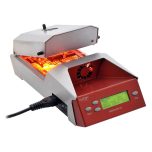
What reflow profile does SnBi solder need?
The whole reflow profile is scaled down. The peak temperature is typically 165 to 190 °C, only about 25 to 50 K above the melting point. Time above liquidus (TAL) should be around 30 to 60 seconds.
A flux matched to the low temperature is essential: standard SAC pastes often only activate above 150 °C and leave residues or voids with SnBi. Use a solder paste released for low-temperature work.
How do you control the brittleness of bismuth solders?
The biggest reliability drawback is brittleness. Bismuth itself is a brittle metal, so the joint tolerates mechanical shock and bending worse than SAC or SnPb. It becomes critical when mixed with lead.
- Choose silver- or micro-alloyed SnBi grades: they raise ductility considerably.
- Rule out lead contamination: use only lead-free component finishes (e.g. pure tin, NiPdAu).
- Run drop and bend tests per IPC/JEDEC for shock- or flex-loaded applications.
- Do not use for high-reliability, vibration-loaded automotive or aerospace assemblies without qualification.
For many consumer and LED applications reliability is sufficient as long as the assembly sees no heavy mechanical stress. Always base release on an application-realistic reliability test, not only on the visual appearance of the joint.
Frequently asked questions
At what temperature does bismuth solder melt?
The eutectic 57Bi/43Sn alloy melts sharply at 138 °C. The reflow peak is typically 165 to 190 °C, roughly 70 K below SAC305.
Why is a bismuth joint more brittle?
Bismuth is a brittle metal that lowers the ductility of the joint. Silver- or micro-alloyed SnBi grades improve toughness noticeably but do not replace an application-realistic drop or bend test.
Can I combine SnBi with lead-bearing leads?
No. Bismuth, tin and lead form a eutectic with a melting point of only 96 °C that badly weakens the joint. Use lead-free component finishes exclusively.
Do I need a special solder paste?
Yes. Standard SAC pastes often activate the flux only above 150 °C. For SnBi at 138 °C you need a paste released for low temperature, otherwise you risk voids and residues.
Low-temperature solder for your process?
Learn more about SnBi solder pastes and wire for reflow at 138 °C, plus profile, flux and reliability, in our guide.
Gentle soldering
138 °C protects heat-sensitive parts and thin boards.
Profile support
We help with the low reflow profile and flux selection.
Reliability checked
Recommendation to match your drop and bend test requirements.
Selection help
We help you choose the right products; technical details are clarified with the manufacturer.