
Cleanroom Airlock Design - How Do You Get It Right?
The personnel airlock is the controlled boundary between the unclean outside and the cleanroom, and the main path for particle and microbial ingress. This guide explains gowning zoning, the pressure cascade and interlock door control to ISO 14644 and GMP Annex 1.
To the guidesHow do you lay out the gowning zones?
A personnel airlock is divided into zones of increasing cleanliness. The transition from the unclean to the clean side happens step by step along a clearly defined bench or line logic, so that street clothing and cleanroom garments stay physically separated.
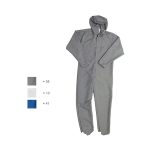
In the first zone, street shoes are removed and hands are disinfected. In the middle grey zone, hood, coverall and overshoes are put on. Only in the final clean zone are gloves and face mask donned before entry to the cleanroom is released.
How do you build the pressure cascade?
The pressure cascade ensures air always flows from the cleaner to the less clean area. Each airlock holds a defined overpressure against the adjacent dirtier room, so that opening a door does not draw particles inward.
GMP Annex 1 gives a guide value of about 10 to 15 Pa pressure difference between adjacent rooms of different class. The values sum along the cascade: an aseptic core can therefore sit at 30 Pa or more relative to the unclean corridor.
- Bubble airlock: higher pressure than both neighbours - protects the cleanroom from ingress.
- Sink airlock: lower pressure - protects the surroundings from hazardous process materials.
- Pressure difference per step 10‑15 Pa, continuously measured and documented.
- Mount a magnehelic gauge or differential pressure monitor with alarm visibly at every airlock door.
Pressure hold depends directly on air volume and envelope tightness. Leaking doors, cable penetrations or too low an air change rate collapse the cascade, which is why tightness and airflow are verified together during qualification.
How does interlock door control work?
The interlock control prevents both doors of an airlock from standing open at the same time. This is the only way the pressure cascade and classification survive a passage, because two open doors would short-circuit the separation.
Technically this is solved with electromagnetic locks, door sensors and a status light. When a person opens the first door, the second stays locked until the first is closed again and any purge time has elapsed.
- Optical and acoustic signals make correct operation easier.
- A time delay or purge lets the cascade rebuild after a passage.
- Bypass only via a documented maintenance mode, never during operation.
Frequently asked questions
How large should the pressure difference between airlocks be?
GMP Annex 1 gives a guide value of 10 to 15 Pa between adjacent rooms of different cleanliness class. Along the cascade the steps sum up toward the core area.
Why may only one door be open at a time?
Two doors open at once short-circuit the pressure cascade and let unclean air flow into the cleanroom. The interlock keeps the separation intact during a passage.
Do you always need an overpressure airlock?
No. Overpressure applies for product protection, while a sink airlock may be needed to protect against hazardous substances. The direction follows from the process risk assessment.
How many gowning zones make sense?
Three steps are common, from unclean through a grey gowning zone to the clean side with a cross-over bench. The exact number depends on the target ISO class and the flow of people.
Planning or equipping a personnel airlock?
Cleanroom benches, differential pressure monitors, interlock controls and gowning systems are matched to ISO 14644 and GMP Annex 1. More in our guides.
Standards-compliant
Planning to ISO 14644 and GMP Annex 1.
Cascade under control
Defined pressure steps of 10-15 Pa per airlock.
Safely interlocked
Interlock with emergency release and escape route.
Selection help
We help you choose the right products; technical details are clarified with the manufacturer.