
Isopropanol or an Alternative for PCB Cleaning?
Isopropanol (IPA) is the standard solvent for cleaning printed circuit boards and assemblies. This guide compares IPA with alternative solvents by cleaning power, residues, drying behaviour and ESD compatibility, and shows when to reach for which.
View cleaning productsWhy is isopropanol the standard for PCB cleaning?
Isopropanol (2-propanol, IPA) dissolves flux residues, finger grease and loose particles and evaporates without residue. Electronics cleaning uses a purity of 99.9 % so that no water or contaminants remain that could promote corrosion or leakage currents.
IPA is compatible with most plastics, coatings and component housings and is miscible with water. Its low boiling point of 82 °C ensures fast drying, but the flash point of around 12 °C makes it highly flammable - ventilation and the absence of ignition sources are mandatory.
- Reliably dissolves rosin and no-clean flux residues.
- Evaporates with no insulating or sticky residue.
- Miscible with water, easy to rinse, low odour.
- Highly flammable - use only in a ventilated, spark-free area.
How do the alternatives compare?
Not every flux and not every assembly tolerates IPA equally well. For stubborn, polymerised fluxes or sensitive displays, alternative solvents and modified alcohols come into play. The table below compares typical options.
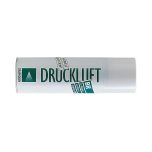 Compressed air and cleaning spray
How to combine solvents with compressed air for dust- and particle-free drying.
View productsWhat about ESD compatibility and safety?
Pure solvents such as IPA are not themselves dissipative - evaporation and rubbing can build up electrostatic charge. Cleaning therefore takes place at a grounded ESD workstation: the operator grounded via a wrist strap, the assembly on a dissipative mat, charge drained in a controlled way to DIN EN 61340‑5‑1.
- Connect wrist strap and ESD mat to the common ground point.
- Use lint-free ESD wipes or swabs instead of ordinary cotton.
- Do not rub dry over plastic housings - that creates charge rather than draining it.
- Dose solvent only in small amounts and keep containers closed.
- For lasting dissipation there are ESD-suitable, slightly conductive cleaners.
On safety, for IPA and ethanol: good ventilation, no open flames, closed containers and attention to the safety data sheet. Non-flammable alternatives avoid the flammability issue but require their own extraction and disposal rules.
Frequently asked questions
Which isopropanol purity do I need for PCBs?
For electronics use 99.9 % (anhydrous). The 70 % disinfection grade contains water, dries slowly and can leave marks or cause corrosion.
Is isopropanol ESD-safe?
IPA itself is not dissipative. ESD safety comes from the grounded workstation - wrist strap, dissipative mat and lint-free ESD wipes to DIN EN 61340‑5‑1.
When is an alternative to IPA worthwhile?
For polymerised fluxes, sensitive displays or when the low flash point is a problem in Ex zones. Then modified alcohols or non-flammable cold cleaners help.
Do I need to rinse after using IPA?
For no-clean and rosin fluxes usually not, as IPA evaporates residue-free. Aqueous cleaners for ionic residue do need a rinse and dry step.
Looking for the right solvent for assembly cleaning?
We supply isopropanol 99.9 %, low-odour alternatives and non-flammable cold cleaners - matched to your process.
Electronics grade
IPA 99.9 % anhydrous, evaporates residue-free.
ESD compliant
Matched to a workstation per DIN EN 61340-5-1.
Fully documented
Safety and technical data sheets included.
Selection help
We help you choose the right products; technical details are clarified with the manufacturer.