
Cleanroom classes per ISO 14644-1 and GMP: limits and suitable equipment
How clean a cleanroom has to be is defined by its class. Today the reference is ISO 14644-1 in its 2015 edition and, for pharmaceutical production, the EU GMP Guide Annex 1 in its 2022 version. We summarise the current limits, show typical applications and which chairs, garments and consumables from our range are suitable for which class according to the manufacturer.
View cleanroom chairsContents
What a cleanroom class tells you
A cleanroom class defines the maximum number of airborne particles of a given minimum size permitted per cubic metre of air. The lower the class number, the cleaner the air.
The basis is ISO 14644-1, currently in its 2015 edition. It defines nine classes from ISO 1 to ISO 9. Counting is cumulative: a limit for 0.5 µm applies to all particles of 0.5 µm or larger. From one class to the next, the permitted values change by a factor of 10.
Mathematically, the limit follows from the formula Cn = 10N × (0.1/D)2.08, where N is the ISO class and D the particle size in µm. The table in the standard rounds these values.
A class always applies to a defined occupancy state. The standard distinguishes the completed room without equipment (as-built), the equipped room without personnel (at-rest) and normal operation with personnel and process (operational). The state therefore always belongs with the class.
Limits for ISO classes 1 to 9
The overview below shows the maximum permitted number of particles per m³ per ISO 14644-1:2015. Only the particle sizes defined for each class are listed.
| ISO class | Max. particles per m³ (≥ particle size) |
|---|---|
| ISO 1 | 0.1 µm: 10 |
| ISO 2 | 0.1 µm: 100 · 0.2 µm: 24 · 0.3 µm: 10 |
| ISO 3 | 0.1 µm: 1,000 · 0.2 µm: 237 · 0.3 µm: 102 · 0.5 µm: 35 |
| ISO 4 | 0.1 µm: 10,000 · 0.3 µm: 1,020 · 0.5 µm: 352 · 1 µm: 83 |
| ISO 5 | 0.1 µm: 100,000 · 0.3 µm: 10,200 · 0.5 µm: 3,520 · 1 µm: 832 |
| ISO 6 | 0.1 µm: 1,000,000 · 0.5 µm: 35,200 · 1 µm: 8,320 · 5 µm: 293 |
| ISO 7 | 0.5 µm: 352,000 · 1 µm: 83,200 · 5 µm: 2,930 |
| ISO 8 | 0.5 µm: 3,520,000 · 1 µm: 832,000 · 5 µm: 29,300 |
| ISO 9 | 0.5 µm: 35,200,000 · 1 µm: 8,320,000 · 5 µm: 293,000 (operational only) |
In the 2015 edition, ISO 5 no longer has a limit for particles of 5 µm and larger, because the small number of such particles can hardly be measured with statistical reliability. For larger particles the standard provides the so-called M descriptor instead. ISO 9 is used for the operational state only.
GMP grades A to D per EU GMP Annex 1
For the manufacture of sterile medicinal products, the EU GMP Guide Annex 1 also applies. The revised 2022 version has applied since 25 August 2023 and defines cleanliness grades A to D.
| GMP grade | Max. particles per m³ (≥0.5 µm / ≥5 µm) |
|---|---|
| Grade A | At rest: 3,520 / not specified In operation: 3,520 / not specified comparable to ISO 5 |
| Grade B | At rest: 3,520 / not specified In operation: 352,000 / 2,930 comparable to ISO 5 at rest, ISO 7 in operation |
| Grade C | At rest: 352,000 / 2,930 In operation: 3,520,000 / 29,300 comparable to ISO 7 at rest, ISO 8 in operation |
| Grade D | At rest: 3,520,000 / 29,300 In operation: not predetermined, set by the manufacturer based on a risk assessment comparable to ISO 8 at rest |
Unlike ISO 14644-1, Annex 1 looks at microbial contamination as well as particles, with separate limits for air, surfaces and gloves. For grade A the guide calls for unidirectional airflow and gives 0.36 to 0.54 m/s at the working position as guidance.
Which class for which application?
The class a process needs depends on how sensitive the product is to particles. The most critical process step decides, not the average.
| Class | Typical applications |
|---|---|
| ISO 1 to ISO 3 | Semiconductor manufacturing, lithography and wafer processing |
| ISO 4 to ISO 5 | Microsystems, optics and laser technology, sterile work zones |
| ISO 6 to ISO 7 | Electronics assembly, sensors, medical devices, precision engineering |
| ISO 8 to ISO 9 | Packaging, food and plastics processing, pre-zones and airlocks |
| GMP A and B | Aseptic filling and open handling of sterile products |
| GMP C and D | Preparatory and less critical steps in pharmaceutical manufacturing |
In electronics, two requirements meet: components must be protected from particles and from electrostatic discharge. Chairs, garments and consumables should then be both cleanroom-suitable and ESD-compliant. Not every cleanroom product is dissipative, and not every ESD product is suitable for the cleanroom.
Garments and gloves for the cleanroom
People are the largest source of particles in a cleanroom. Garments, gloves and finger cots therefore have to match the class. The class ratings below are taken from the respective product data.
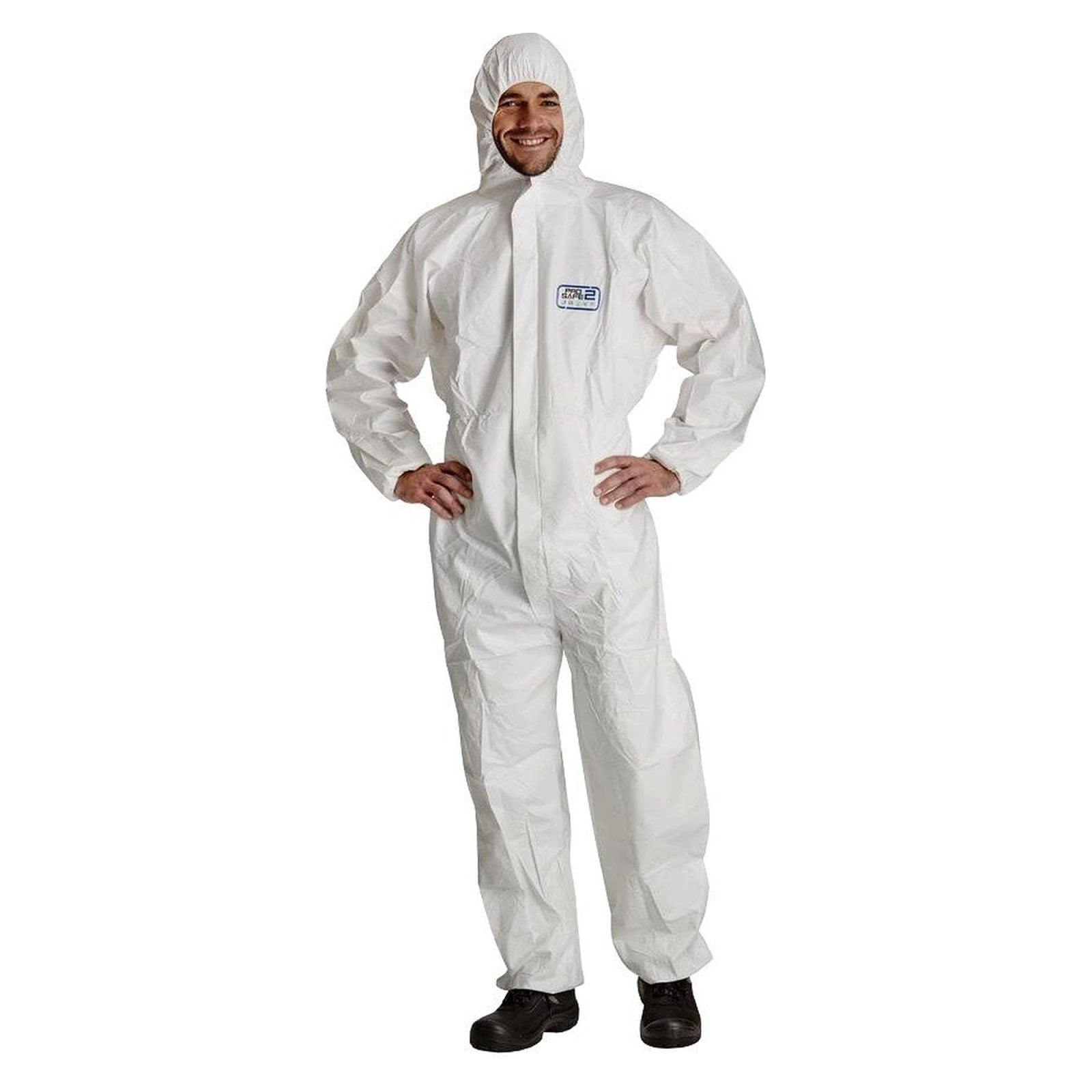
Fabric with woven-in carbon yarn, ESD per IEC 61340-5-1, suitable for ISO class 6.
View productHood with shoulder piece, ESD-compliant and cleanroom-suitable, complements coverall or coat.
View productType 5/6, antistatic per EN 1149-5, for ISO class 7. Not ESD clothing in the sense of IEC 61340-5-1.
View productPowder-free, cleanroom class ISO 4, suitable for ESD workstations per IEC 61340-5-1 according to the manufacturer.
View productPowder-free and dissipative, cleanroom class ISO 5, for gripping small components.
View product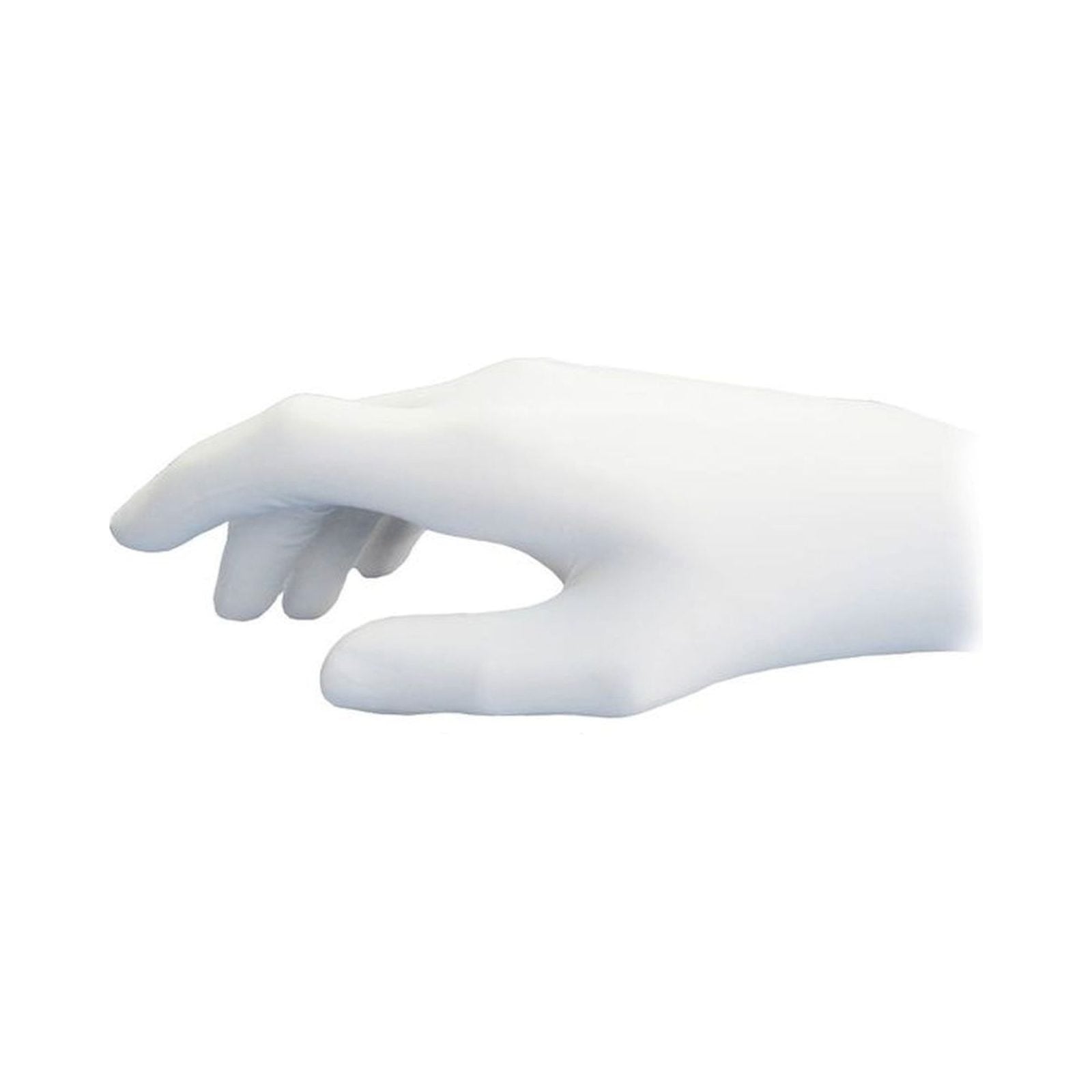
Cleanroom chairs with ESD features
Seating also releases particles through abrasion and movement. Cleanroom chairs are therefore tested and rated for a specific class. In electronics, dissipative versions are required.
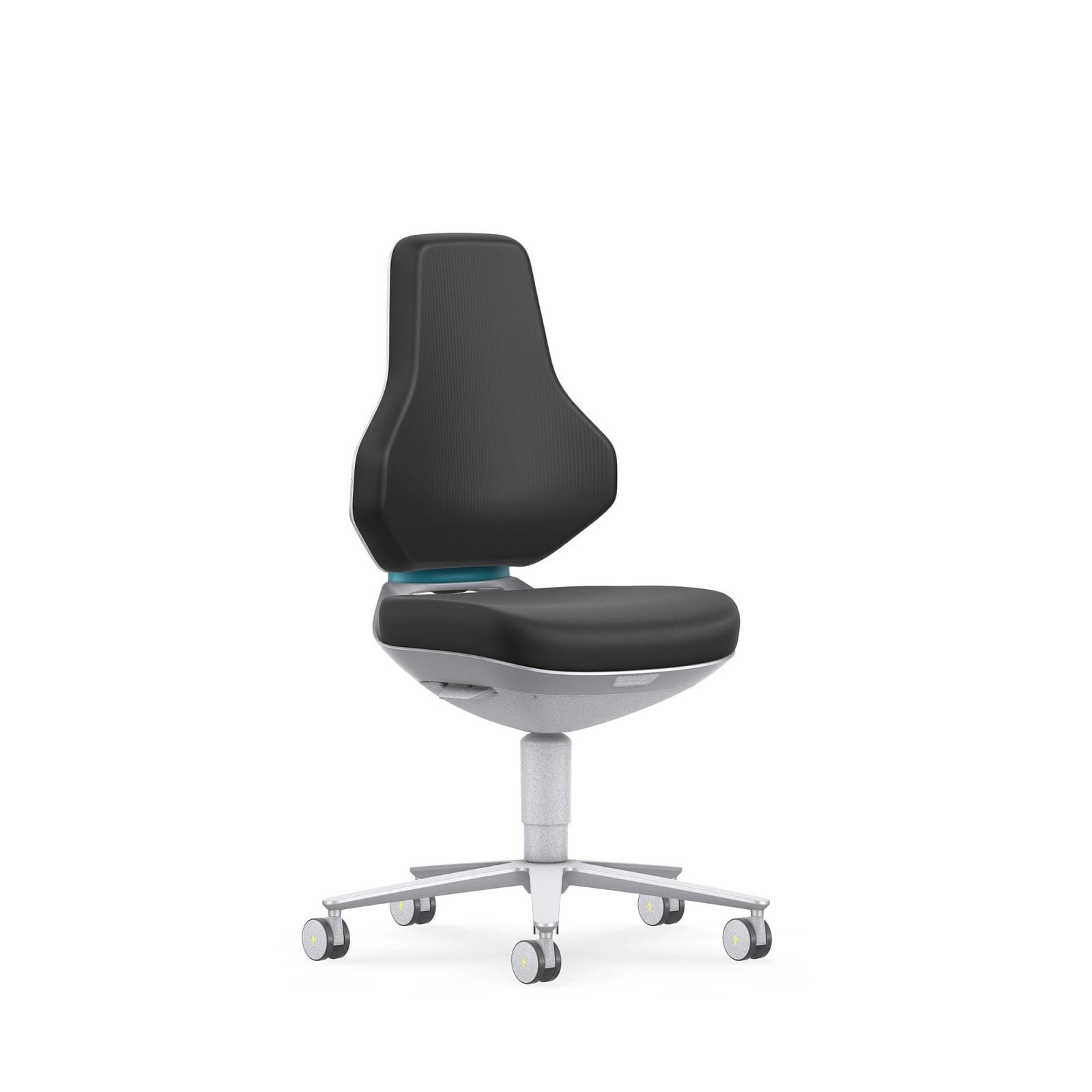
ESD cleanroom swivel chair, air cleanliness class 3, hygienic design and tool-free replaceable upholstery.
View productStool for ISO class 3, ESD per EN 61340-5-1, with cleanroom castors.
To the guidesClass 3 per ISO 14644-1, with conductive vinyl cover and conductive castors.
View productTested by the Fraunhofer Institute, air cleanliness class 5, fitted with ESD castors.
View productWipes, swabs and sticky mats
Consumables come into direct contact with the product and work surface. Wipes and swabs should therefore release as few particles as possible themselves and be rated at least for the class of the room.
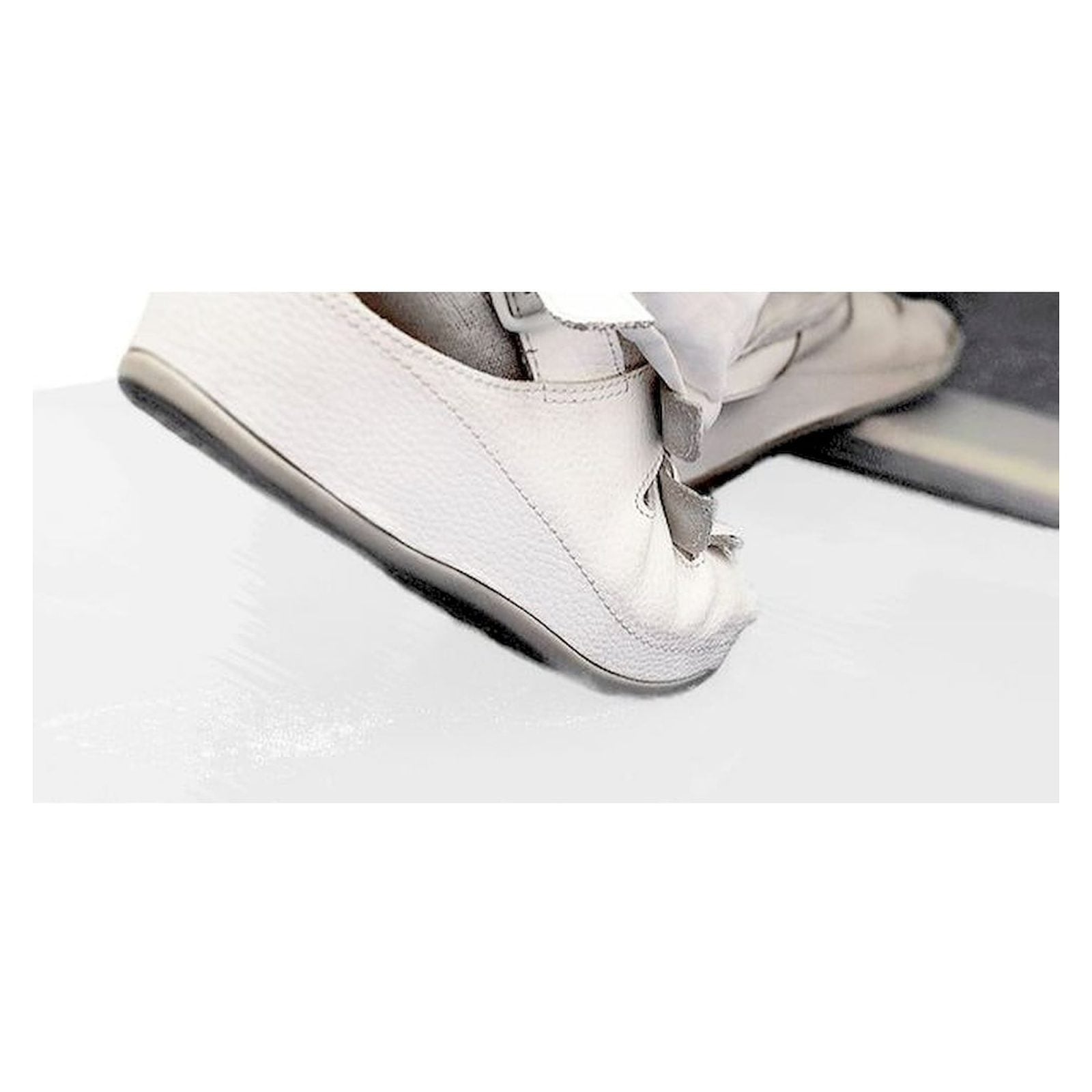
At the entrance to the cleanroom, sticky mats remove dirt from shoe soles and wheels. The white cleanroom sticky mat (660 × 1140 mm, 30 layers) is intended for entrances and airlocks. For EPAs there is the antistatic ESD and cleanroom sticky mat (600 × 1200 mm, 30 layers). When the top layer is dirty, it is peeled off.
What to look for when selecting equipment
The class of the room determines which requirements equipment and consumables have to meet. A few points help with the selection.
- Check the class: the rated class of a product should be at least as strict as that of the room.
- Convert old designations: Class 10 corresponds roughly to ISO 4, Class 100 to ISO 5, Class 1,000 to ISO 6, Class 10,000 to ISO 7 and Class 100,000 to ISO 8.
- Distinguish ESD and antistatic: antistatic per EN 1149-5 is not the same as ESD-compliant per IEC 61340-5-1. In an EPA, ESD suitability is what counts.
- Consider the occupancy state: a class at rest says little about normal operation. Personnel, garments and work routines determine the result in operation.
- Think of the airlock: sticky mats, a changing area and dress rules keep particles away from the cleanroom.
Frequently asked questions
What does ISO 5 mean in practice?
A room of ISO class 5 may contain no more than 3,520 particles of 0.5 µm and larger and no more than 832 particles of 1 µm and larger per cubic metre of air. This roughly corresponds to the former Class 100 per FED-STD-209E.
How do ISO classes and GMP grades differ?
ISO 14644-1 only classifies airborne particles. The EU GMP Guide Annex 1 additionally sets microbial limits for grades A to D and distinguishes strictly between at rest and in operation.
What does cleanroom Class 100 or 1000 on a product page mean?
These are designations from the withdrawn US standard FED-STD-209E. Class 100 corresponds roughly to ISO 5, Class 1,000 roughly to ISO 6.
How often does a cleanroom have to be re-tested?
ISO 14644-2:2015 specifies a maximum interval of 12 months for demonstrating particle concentration. GMP rooms are additionally subject to Annex 1 and the company's own risk assessment.
Do I need ESD products in an electronics cleanroom?
Yes, if electrostatic sensitive devices are handled in the cleanroom. Chairs, garments, gloves and consumables should then be both cleanroom-suitable and ESD-compliant.
Request cleanroom equipment
Tell us the class of your cleanroom and whether ESD protection is also required. We will send you a quote for suitable chairs, garments and consumables.
ESD and cleanroom
Products meeting both requirements, clearly labelled.
Manufacturer data
Cleanroom classes only as rated by the manufacturer.
Cleanroom chairs
Bimos, Warmbier and meychair in our range.
Consumables
Gloves, wipes, swabs and sticky mats from one source.