
Adhesive-lined heat shrink - how does it seal watertight?
Adhesive-lined heat shrink seals splices and cable entries permanently watertight. This guide explains its construction, the 3:1 and 4:1 shrink ratios, the hot-melt adhesive, the correct shrink temperature and how to size it to the cable diameter.
To the guidesHow does adhesive-lined heat shrink work?
Adhesive-lined tubing combines two elements: an outer cross-linked polyolefin wall that shrinks when heated and an inner layer of thermoplastic hot-melt adhesive. As you apply heat the tube contracts while the glue melts, flows into every gap and bonds to the cable jacket and insulation to form one sealed unit.
Once cooled, the adhesive solidifies into a lasting moisture barrier. The result is a joint that reaches ingress protection IP68 even on cable entries and splices, guarding against water, dust, vibration and pull-out.
Which shrink ratio and size is right?
Adhesive-lined tubing is commonly offered in 3:1 or 4:1 shrink ratios, meaning it shrinks to a third or a quarter of its supplied diameter. A high ratio matters when you bridge very different diameters, for example over a connector boot or a wiring-harness breakout.
Choose a supplied diameter at least 20 percent larger than the biggest part you cover, and a recovered diameter smaller than the thinnest cable. Only then does the tube grip firmly and the glue fill the gap completely.
- Pick a supplied diameter at least 20 % over the largest part.
- The recovered diameter must be smaller than the thinnest cable.
- Thick-wall versions carry more glue and add mechanical protection.
- Prefer 4:1 for breakouts and Y-transitions.
How do you shrink the tube correctly?
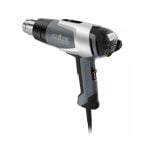
Clean and degrease the surface, slide the tube over the joint with enough overhang and heat it evenly with a hot-air gun. The hot-melt adhesive typically activates between 80 and 120 °C. Work from the centre outward so trapped air can escape.
- Do not overheat one spot with an open flame or the polyolefin chars.
- Position the tube centrally and allow for overhang before heating.
- Let the joint cool undisturbed after shrinking.
- Visual check: a continuous glue bead at both ends.
Frequently asked questions
How does adhesive-lined tubing differ from plain?
The inner glue melts on heating and fills every void, making the joint watertight and strain-relieved. Tubing without glue only insulates mechanically.
Which shrink ratio should I choose?
3:1 suits moderate diameter steps. For sharp transitions such as connectors or harness breakouts pick 4:1 so the tube grips both ends securely.
At what temperature does it shrink?
Shrink temperature is usually around 90 to 120 °C and the hot-melt glue activates from about 80 °C. A hot-air gun is ideal; avoid an open flame.
Is the joint really watertight?
Processed correctly, adhesive-lined tubing reaches IP68. The condition is a continuous glue bead at both ends confirming complete sealing.
Looking for adhesive-lined heat shrink?
Adhesive-lined heat shrink in 3:1 and 4:1, thin- and thick-wall, suits watertight splices and cable entries up to IP68 - more in our guides.
Watertight
The inner adhesive seals to ingress protection IP68.
Temperature-proof
Serves from -55 to +125 °C without losing its seal.
Strain-relieved
Bonding to the jacket protects against pull and vibration.
Selection help
We help you choose the right products; technical details are clarified with the manufacturer.