
How to Choose a Heat Gun for Your Task
A heat gun is defined by two figures: its temperature range and its air flow. This guide shows which values suit heat shrink tubing, loosening adhesives and labels, and drying, and which nozzles make the work easier.
View heat gunsContents
Temperature and air flow - what matters most?
A heat gun delivers a focused stream of hot air controlled by two figures: the outlet temperature and the air flow in litres per minute. Only the interplay of both decides how much heat actually reaches the workpiece.
Temperature sets how hot the air is, while air flow determines how much energy is transferred per unit of time. A high volume at a moderate temperature dries surfaces gently, while a fine jet at high temperature loosens adhesive or solder in a single spot.
Shrink, loosen or dry - which setting?
Each task has its own window of temperature and air flow. Hit it, and you work faster without damaging the part or the surface underneath.
- Heat shrink tubing: move evenly from the centre outward until the tube (ratio usually 2:1 or 3:1) fits snugly. Too much heat chars the material.
- Loosening adhesive and labels: preheat the area, then peel off with a scraper. The heat softens the glue without attacking the paint.
- Drying: high air flow at low temperature so moisture evaporates instead of baking in.
- Freeing seized fasteners: heat locally so the metal expands and thread lock releases.
- Forming or welding plastic: high temperature with a suitable wide-slot nozzle for even heating.
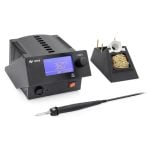 Soldering station
For fine electronics work a controlled soldering station is the better heat source.
View productsWhich nozzles and accessories make sense?
The nozzle shapes the air stream and has a big say in the result. A small set of attachments covers almost every task.
- Overheat protection and a cool-down stage spare the heating element and motor.
- A stand or hanging eyelet allows stationary work with both hands free.
- Fine control or an LCD display for repeatable temperatures.
Frequently asked questions
What temperature do I need for heat shrink tubing?
Usually 120 to 200 °C at low to medium air flow is enough. Move the hot-air stream evenly until the tube fits snugly, without charring it.
Is a heat gun enough for electronics soldering?
For coarse shrink and loosening jobs, yes. Fine SMD soldering works better with a controlled soldering station or a hot-air rework tool with a fine nozzle and precise temperature control.
How do temperature and air flow differ?
Temperature describes how hot the air is, air flow how much of it streams per minute. Only both together determine the heat input at the workpiece.
How do I avoid damaging the surface?
Keep the tool moving, choose the right nozzle and test in an inconspicuous spot. A lower temperature with higher air flow is often gentler.
Looking for the right heat gun?
We stock heat guns with controlled temperature and a matching nozzle set - for heat shrink, loosening tasks and drying.
Controlled heat
Temperature and air flow set independently.
Right nozzles
Reflector, wide-slot and reducer nozzles available.
Safe operation
Overheat protection and cool-down stage as standard.
Selection help
We help you choose the right products; technical details are clarified with the manufacturer.