
Air purifier maintenance: when to change and dispose filters?
An air purifier is only as good as its filters. This guide explains change intervals for the pre-filter, HEPA and activated carbon stages, how to spot filter saturation early and how to dispose of loaded elements safely.
View replacement filtersContents
What filter stages does an air purifier have?
A professional air purifier works in stages: the pre-filter captures coarse particles such as dust and hair, the HEPA stage filters fine dust and aerosols, and the activated carbon stage binds odours, solvent vapours and volatile organic compounds (VOCs). Each stage has its own change interval.
The pre-filter protects the more expensive downstream stages and noticeably extends their service life. Neglect it and the HEPA filter clogs faster while the airflow drops.
How do I know when a filter is saturated?
A saturated filter loses its effect without it being obvious at first. Modern units measure the differential pressure across the filter: as resistance rises, airflow drops and the filter indicator triggers. Do not rely on the calendar alone but on the actual load.
- Weaker airflow or an audibly higher fan speed at the same setting.
- Indicator or differential-pressure sensor reports increased resistance.
- For carbon: odours and vapours are no longer reliably captured.
- Visible discolouration or clogging of the pre-filter on inspection.
- Measured fine-dust value rises despite the unit running.
How do I change filters correctly and safely?
Switch the unit off and unplug it before every change. A saturated HEPA filter holds hazardous particles - it must not be knocked out or vacuumed, otherwise trapped substances are released again. In a contaminated environment wear a respirator (at least FFP2) and gloves.
- Switch off the unit, pull the plug and let it settle briefly.
- Remove the spent filter carefully without shaking it.
- Place the old filter straight into a sealable bag.
- Clean the filter seat and gaskets, fit the new filter correctly.
- Note the change date and reset the filter indicator.
How do I dispose of loaded filters correctly?
Disposal depends on the load absorbed. A filter from an office with pure fine-dust exposure is general waste. Filters that have bound hazardous substances, solvents, heavy metals or biologically critical matter count as special waste and must be disposed of separately.
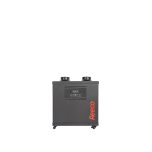 Solder and process extraction
Find matching filters and extraction for loaded workplaces.
View productsFrequently asked questions
How often must I change the HEPA filter?
Depending on load, typically every 6 to 24 months. In continuous operation or with heavy dust, closer to the lower end. Differential pressure and the manufacturer's data sheet matter more than the calendar alone.
Can I clean and reuse a HEPA filter?
No. A HEPA filter is never washed or knocked out, as that releases trapped particles again. Only washable pre-filters may be cleaned as stated on the data sheet.
How do I recognise an exhausted carbon stage?
By the odour breakthrough: once odours and vapours are no longer reliably captured, the adsorption capacity is spent. The carbon does not age visibly, so smell is the best signal.
Must loaded filters go to special waste?
Only if they have bound hazardous substances such as solvents, heavy metals or metal dust. Pure fine dust from office air is general waste in a sealed bag.
Looking for the right replacement filters?
We supply pre-filters, HEPA elements per EN 1822 and activated carbon filters for common air purifiers and process extraction. Questions about the right interval? Send us a message.
Per EN 1822
HEPA filters in tested classes H13 and H14.
Exact fit
Replacement filters for common unit types in stock.
Clear intervals
We recommend the right change interval for your load.
Selection help
We help you choose the right products; technical details are clarified with the manufacturer.