
Barcode or QR Code in the Warehouse - Which Wins?
Barcodes and QR codes both label items, bin locations and containers - but they differ sharply in data capacity, readability and the scanners they need. This guide compares 1D barcodes and 2D QR codes for warehousing and picking and shows when each symbology pays off.
View labellingHow do barcodes and QR codes differ?
The classic barcode is a one-dimensional linear code: information sits solely in the width of bars and spaces and is read only horizontally. The QR code (Quick Response) is a two-dimensional matrix code that stores data in rows and columns, holding many times more characters in the same area.
An EAN-13 or Code 128 typically encodes 13 to roughly 40 characters - enough for an item or batch number. A QR code holds up to 7089 digits or 4296 alphanumeric characters depending on version, so full URLs, serial numbers and metadata fit into a single symbol.
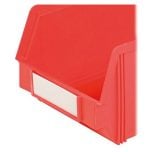
Data capacity, readability and robustness compared
Three criteria matter in warehousing and picking: how much fits in, how reliably it reads and how robust the code stays when damaged. QR codes gain a clear edge under dirt and abrasion thanks to Reed-Solomon error correction.
- QR error correction level H restores data even when up to 30 % of the symbol is destroyed.
- 1D codes need steady alignment to a laser scanner, while QR codes are read from any angle.
- Print quality is graded A to F per ISO/IEC 15416 (1D) and ISO/IEC 15415 (2D).
- QR codes stay readable at small module sizes, so they fit small parts and PCBs.
When to use a barcode, when a QR code?
The choice depends on data needs and hardware. Plain numbers and high throughput favour 1D barcodes; complex traceability and small labels favour QR codes. Your existing scanner fleet is the deciding factor.
- Choose a barcode: short item or location numbers, very high scan volume, existing laser scanners.
- Choose a QR code: serial numbers, batches, links to digital data, small or curved surfaces.
- For mixed processes, invest in a 2D imager - it covers both worlds.
- Respect the quiet zone and contrast, or read rates drop regardless of code type.
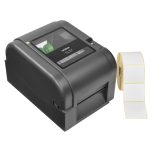
Frequently asked questions
Can a QR code store more data than a barcode?
Yes, far more. A 1D barcode holds 13 to about 40 characters depending on symbology, while a QR code holds up to 7089 digits or 4296 alphanumeric characters in the same area.
Is a QR code more robust against damage?
Yes. Reed-Solomon error correction keeps a QR code readable even when up to 30 % of the area is destroyed at level H. 1D barcodes have no error correction at all.
Do I need new scanners for QR codes?
QR codes need a 2D imager or a smartphone; classic laser scanners read 1D only. A 2D imager also captures every common barcode, making it the most flexible choice.
Which standard grades print quality?
1D codes are graded per ISO/IEC 15416 and 2D codes such as QR per ISO/IEC 15415, on a scale from A to F. Good quality secures high read rates in the warehouse.
Barcode or QR code for your warehouse?
We supply labels, rack signs and marking for 1D and 2D codes - matched to your scanner fleet and your traceability needs.
Standards compliant
Verified per ISO/IEC 15415 and 15416.
For any warehouse
Solutions for racks, bins and small parts.
Field proven
Labels for continuous scanning duty.
Selection help
We help you choose the right products; technical details are clarified with the manufacturer.