
How to store and issue cleanroom garments correctly
Cleanroom clothing is only as effective as the way it is stored and issued. This guide shows how hanging systems, dispensers and a strict split between clean and used garments build a working garment management concept in line with DIN EN ISO 14644.
To the guidesWhy is separating clean and used garments so important?
Cleanroom clothing protects the product only when fresh and worn garments stay physically apart. Reprocessed items are stored and issued in a low-particle area, while used coveralls, hoods and overshoes leave the system through a separate return route. This prevents recontamination during gowning and de-gowning.
The changing airlock follows the black-and-white principle: an unclean side (black) and a clean side (white) are separated by a bench barrier or floor marking. Clean clothing is presented only on the white side, while used garments are returned on the black side.
- White side: only clean, packed or hanging cleanroom garments.
- Black side: return of worn items into closed collection bins.
- Clear floor marking and a bench barrier as a physical boundary.
- Short, non-crossing routes between issue point and gowning spot.
Hanging system or dispenser - which fits when?
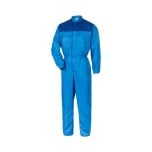
Reusable coveralls are stored on hangers so they do not crease and particles can settle away from the fabric. Single-use items such as hoods, masks, overshoes and gloves come from closed dispensers that keep them dust-protected and individually removable.
For personal assignment a numbered compartment scheme works well: every employee gets a fixed locker or hanger position with an ID, so the same coverall stays assigned across the wear cycle and never ends up in the wrong area.
What does a clean issuing process look like?
A working garment management system controls who receives which set and when it goes back to the laundry. Cleanroom suits are delivered in protective packaging after a validated wash process, stored hanging or folded, and swapped out on a fixed wear cycle of usually 5 to 7 working days.
- Issue by number or RFID so size and cycle always match.
- First-in-first-out: hand out the oldest reprocessed set first.
- Return worn items only into closed collection containers.
- Sort out damaged or worn garments rather than reissuing them.
- Log wash cycles - coveralls last around 10 to 25 reprocessings depending on fabric.
The issue point should sit close to the clean side of the airlock so the path from a fresh set to the gowning spot stays short and non-crossing. A central cleanroom garment management system with barcode or RFID reduces loss and keeps every batch traceable.
Frequently asked questions
Do clean and used cleanroom garments really need separate storage?
Yes. DIN EN ISO 14644‑5 requires separate areas and routes for clean and dirty clothing so reprocessed items are not recontaminated by worn ones.
Hanging or folded storage?
Store reusable coveralls on hangers so they stay crease-free and particles settle away. Single-use items such as hoods and overshoes come dust-protected from closed dispensers.
How often can a cleanroom suit be reused?
Depending on fabric and wash process, around 10 to 25 validated reprocessings are common. RFID chips help document the number of cycles reliably.
Why is stainless steel suited to cabinets and dispensers?
Stainless steel 1.4301 is smooth, corrosion-resistant and can be wet wipe-disinfected without shedding particles - ideal for clean zones.
Want to learn more about cleanroom garment management?
Learn more about hanging systems, stainless cabinets and dispensers for the clean storage and issuing of cleanroom clothing, matched to ISO class, in our guide.
Standard-compliant
Zoning and storage per DIN EN ISO 14644-5.
Cleanly separated
Clear split between clean and unclean side.
Fully traceable
RFID and barcode solutions for every cycle.
Selection help
We help you choose the right products; technical details are clarified with the manufacturer.