
How to Use a Feeler Gauge to Check Gaps Correctly
A feeler gauge measures gaps and clearances where a caliper no longer fits. This guide covers the practical use for checking gap dimensions, choosing the right blade set and the reliable go/no-go method.
View feeler gaugesWhat is a feeler gauge and what is it used for?
A feeler gauge is a set of thin, precisely rolled steel blades of defined thickness that are slid into a gap singly or stacked. Each blade is stamped with its nominal value, with thicknesses typically running from 0.05 mm to 1 mm. This lets you measure clearances that are too narrow for a caliper.
Classic uses are engine valve clearance, spark plug electrode gap, gear backlash, the flatness of sealing faces and guide or bearing clearances in machinery. The blades pivot at one end inside a holder and fold away like a pocket knife.
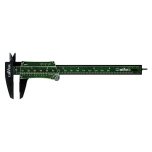 Reading a caliper correctly
For wider distances: how to measure precisely with caliper and micrometer.
View productsHow do you check a gap step by step?
First clean the gap and the blades of oil, chips and dirt, because even a single particle skews the result. Estimate the gap roughly and start with a thinner blade that enters without force.
- Wipe the gap and blade clean and dry.
- Insert the blade straight without cocking it, do not push or bend.
- You have the right thickness when you feel light, even drag.
- If the gap is not a single nominal size, stack several blades and add the thicknesses.
- Record the measured value and compare it with the target specification.
Which blade set and version should you choose?
The right blade set depends on the range, the blade length and the material. Standard metric sets cover 0.05 to 1 mm with 13 to 20 blades, and inch sets or fine-step sets are available too.
- Blade length: 100 mm standard, long 150‑300 mm blades for deep or awkward gaps.
- Material: hardened spring steel is standard, stainless resists rust, brass is spark-free and non-magnetic.
- Step size: fine 0.01 mm steps for precision, coarser steps for maintenance.
- Shape: straight blades are universal, angled or tapered tips reach tight spots.
Frequently asked questions
How hard should I push when inserting?
Not hard at all. The correct blade slides in with light, even drag. If you have to push or the blade bends, it is too thick and the reading is wrong.
Can I combine several blades?
Yes. If the gap is not a single size, stack two or three blades flat against each other and add the thicknesses, for example 0.20 plus 0.10 gives 0.30 mm.
Which material should I pick?
Hardened spring steel is the standard. In damp conditions choose stainless steel, and near fuel or magnetic fields choose spark-free, non-magnetic brass.
How do I care for a feeler gauge?
Wipe the blades after use, oil them lightly and store them dry. Replace bent or rusted blades and check the blade thickness with a micrometer now and then.
Looking for the right feeler gauge?
We supply feeler gauges in spring steel, stainless steel and brass with blade thicknesses from 0.05 to 1 mm, in short and long versions.
Precisely rolled
Blades with a tight thickness tolerance around ±0.01 mm.
Rugged materials
Spring steel, stainless steel and spark-free brass.
Clearly marked
Every blade is stamped with its nominal value.
Selection help
We help you choose the right products; technical details are clarified with the manufacturer.