
IPC-7711/7721 - how does the standard govern rework?
IPC-7711/7721 is the international standard for rework, repair and modification of electronic assemblies. This guide explains the structure of the standard, the three skill levels, the numbered procedures and the required tools and temperature limits.
View rework equipmentContents
What exactly do IPC-7711 and IPC-7721 cover?
IPC-7711/7721 is a jointly published document in two parts. IPC-7711 describes rework, meaning the removal and reattachment of components, while IPC-7721 covers the repair and modification of circuit boards and conductors. Both parts use clearly numbered, illustrated procedures.
The standard defines not only how a procedure is performed but also which tools, temperatures and consumables are permitted. This makes a repair reproducible and verifiable afterwards. The current edition is Revision D.
- IPC-7711: desoldering, removal and rework of through-hole and SMD components.
- IPC-7721: repair of conductors, pads, lands and coatings.
- Shared annex covering tools, cleaning and coating procedures.
- Reference to IPC-A-610 as the acceptance benchmark for the result.
How are skill levels and procedures organised?
Each procedure is assigned a skill level that indicates the experience required of the operator. This lets a repair shop quickly judge whether a task suits a beginner or only an experienced specialist.
In addition, the three product classes from IPC-A-610 apply: Class 1 for consumer goods, Class 2 for industrial electronics and Class 3 for high-reliability assemblies in medical, aerospace and military applications. The higher the class, the stricter the acceptance criteria.
Which tools and temperatures does the standard require?
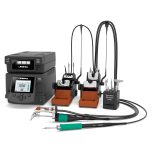
The procedures name specific tools and boundary conditions. For sensitive assemblies a controlled iron temperature applies, typically around 315 °C, together with an ESD-safe workplace per IEC 61340‑5‑1.
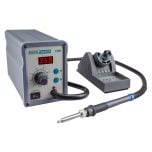
- Temperature-controlled soldering station with a calibrated tip.
- Solder sucker, desoldering braid and vacuum desoldering iron for clean removal.
- Hot-air or infrared rework system for SMD and BGA work.
- Microscope or magnifier with at least 3x magnification for inspection.
- ESD protection on operator and surface to prevent component damage.
Frequently asked questions
What is the difference between IPC-7711 and IPC-7721?
IPC-7711 covers rework, meaning desoldering, removal and replacement of components. IPC-7721 covers repair and modification of the board itself, such as damaged conductors, pads and coatings.
What do the skill levels in IPC-7711/7721 mean?
Every procedure is assigned one of three skill levels. Level 1 covers simple tasks, Level 2 advanced work such as SMD rework, and Level 3 demanding conductor and multilayer repairs.
How is the result accepted?
The repair result is assessed against IPC-A-610, using product Classes 1 to 3. Class 3 demands the strictest criteria for high-reliability electronics.
Is an ESD workplace required for rework?
Yes, sensitive components must be handled at an ESD-protected workstation per IEC 61340‑5‑1. Without grounding and dissipative surfaces, invisible latent damage can occur.
Ready to rework and repair to standard?
We supply temperature-controlled soldering stations, desoldering tools and hot-air rework systems for work to IPC-7711/7721.
Standard-oriented
Equipment for procedures to IPC-7711/7721 and IPC-A-610.
Temperature-controlled
Calibratable stations for reproducible results.
ESD-safe
Matching accessories for a workplace to IEC 61340-5-1.
Selection help
We help you choose the right products; technical details are clarified with the manufacturer.