
Choosing a desoldering station: sucker, braid or pump?
For occasional rework a solder sucker is enough; for fine pads and SMD use desoldering braid. If you remove through-hole parts regularly, a desoldering station with vacuum pump is the right tool. Choose by frequency, throughput and budget.
View desoldering toolsWhich desoldering methods exist?
There are three common methods: the solder sucker for occasional rework, desoldering braid for fine pads and SMD, and the desoldering station with vacuum pump for professional through-hole work at high throughput.
The solder sucker is a manual tool: you melt the joint with an iron, then draw the solder off with a spring-loaded plunger. Cheap and portable, but slow and impractical for many joints.
Desoldering braid is a tinned copper mesh that wicks molten solder by capillary action. Ideal for fine SMD pads, solder bridges and cleaning surfaces, but not for deep plated-through holes.
The desoldering station combines a heated desoldering iron with a vacuum pump. It melts the solder and pulls it through the hollow tip in one step - fast, clean and built for through-hole (THT) work.
| Method | Principle | Typical use |
|---|---|---|
| Solder sucker | Spring suction after melting | Occasional, single joints, portable |
| Desoldering braid | Capillary action in copper mesh | Fine pads, SMD, cleaning surfaces |
| Desoldering station (vacuum) | Heated hollow tip + vacuum pump | Through-hole (THT), high throughput |
When is each tool the right one?
Choose by frequency and part type: a sucker for rare repairs, braid for SMD and fine pads, a desoldering station for regular through-hole work. Cost and throughput rise from the sucker to the station.
For the occasional repair at a hobby or service bench, an iron plus solder sucker is enough. The outlay is small, but the time per joint is high.
For SMD and fine pitch, desoldering braid is usually the cleanest option. It leaves flat, wettable pads and adds little thermal stress - provided the braid width matches the pad.
If you remove many through-hole parts - multi-pin connectors, electrolytic caps, relays - a desoldering station pays off. Vacuum suction clears the hole in seconds and protects the plated barrel.
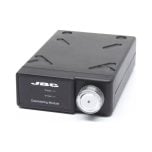 Vacuum pump
Creates the suction that draws molten solder through the hollow tip.
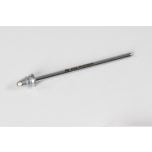 Hollow tip
Heated tip with a bore - match the diameter to the pin.
A stable tip temperature protects board and part from overheating.
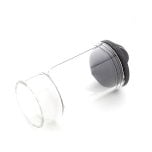 Collection chamber
Collects the extracted solder; regular cleaning keeps suction strong.
Why ESD protection matters when desoldering?
Electrostatic discharge can damage sensitive parts, including during desoldering. Use ESD-safe tools with a grounded tip, work at a dissipative bench and wear a wrist strap.
Modern semiconductors are sensitive to voltage spikes. A grounded desoldering tip and an equipotential bench keep charges from flowing through the component.
When buying, look for the ESD-safe marking on irons, stations and accessories. Combined with a dissipative mat, wrist strap and a defined path to ground, this creates a consistently protected workstation.
Frequently asked questions
Solder sucker or desoldering station - which is better?
It depends on throughput. For single joints and mobile repairs the cheap solder sucker is enough. If you regularly remove many through-hole parts, a desoldering station is much faster and cleaner.
Why use desoldering braid instead of a pump?
Braid suits fine SMD pads, solder bridges and cleaning surfaces where a pump would be too coarse. The copper mesh wicks solder by capillary action and leaves flat, clean pads.
Does desoldering gear need to be ESD-safe?
For sensitive electronics, yes. Grounded tips, a dissipative bench and a wrist strap keep electrostatic discharge from damaging semiconductors. Look for the ESD-safe marking.
Find the right desoldering tools
From solder suckers and braid to ESD-safe desoldering stations - we help you match the equipment to your throughput.
ESD-safe
Tools and accessories for safely handling sensitive components.
Selection help
We help you choose the right products; technical details are clarified with the manufacturer.
For every need
From the hobby bench to professional THT production.
Selection help
We help you choose the right products; technical details are clarified with the manufacturer.