
Oil-Water Separator: why condensate must not go down the drain
Condensate from compressed-air systems carries oil and counts as water-polluting. This guide explains why it must not enter the sewer, how an oil-water separator works and how to size it correctly to your compressor output.
To the guidesWhy must compressed-air condensate not go down the drain?
Every compressor draws moisture in with the air and compresses it. As the air cools, condensate forms, carrying oil from the compressor, dust and acids. This mixture is water-polluting and, under German water protection law (WHG § 62) and comparable EU rules, must not reach the sewer or the ground untreated.
Even small amounts of oil contaminate large volumes of water: one litre of oil can render up to a million litres of drinking water unusable. That is why the regulation on installations (AwSV) requires condensate to be treated before discharge so the residual oil content stays below the municipal limit - typically 20 mg/l.
- Condensate contains compressor oil, hydrocarbons, dust and metal abrasion.
- Its pH is often slightly acidic from absorbed acids.
- Emulsified oils cannot be separated by settling alone.
- Operators must document treatment or disposal.
How does an oil-water separator work?
An oil-water separator cleans the condensate in several stages so that clean water flows to the drain while the separated oil collects in a container. The heart of a modern unit is an activated-carbon stage that adsorbs dissolved hydrocarbons.
First the pressure in the condensate is released so air and liquid settle. In the settling chamber, free oil rises to the top thanks to the density difference. A pre-filter catches particles, then the activated carbon does the actual polishing.
How do you size an oil-water separator?
The size depends on the condensate volume, which in turn depends on compressor output, operating hours and on temperature and humidity. As a rule of thumb, roughly 8 to 10 g of water forms per cubic metre of compressed air, and far more on humid summer days.
- Determine the compressor flow rate in m³/min as the starting point.
- Account for operating hours per day and ambient conditions.
- Choose a separator with reserve: size for the hottest, most humid day.
- Watch the service life of the activated carbon and plan change intervals.
- Provide an outflow check to verify the residual oil content.
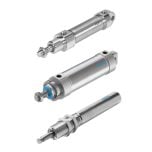 Condensate drain
A no-loss drain feeds the separator at the right rate without wasting air.
View products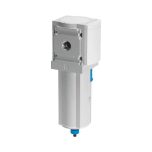
Frequently asked questions
Is compressed-air condensate really hazardous waste?
Oily condensate is water-polluting and must be treated or disposed of under water protection law. Sending it untreated to the drain is water pollution and an offence.
What residual oil content is permitted?
Most municipal by-laws allow a hydrocarbon content of 20 mg/l in discharged water. A correctly sized oil-water separator with activated carbon holds this value reliably.
How often must the activated carbon be changed?
It depends on the condensate volume and oil share. Check the outflow regularly and replace the filter cartridge per the maker's spec, at the latest when the water turns cloudy.
Does the separator work with any compressor oil?
No. Emulsifying synthetic oils cannot be removed by simple settling separators and need emulsion splitting or ultrafiltration. Check the oil data sheet first.
Treat condensate the compliant way?
Oil-water separators come in sizes for every compressor - with an activated-carbon stage and outflow check for a residual oil content below 20 mg/l. More in our guides.
Legally sound
Sized to water protection law, fully documented.
Clean outflow
Residual oil content reliably below 20 mg/l.
Correctly sized
Matched to compressor output and climate.
Selection help
We help you choose the right products; technical details are clarified with the manufacturer.