What are Proxxon industrial ratchets and where are they primarily used in B2B applications?
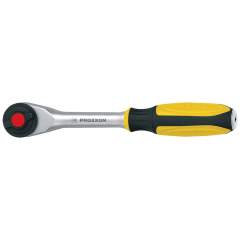
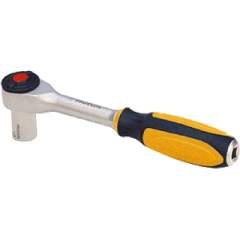
Proxxon industrial ratchets are precision mechanical hand tools designed for professional fastening applications in manufacturing, automotive service, and industrial maintenance environments. These tools feature reversible ratcheting mechanisms in standard drive sizes including 1/4 inch, 3/8 inch, and 1/2 inch configurations to accommodate different socket systems. The Proxxon range includes specialized variants like the Rotary-Ratsche series for continuous rotation applications and MICRO-Kompaktratsche models for confined workspace access. Industrial technicians rely on these tools for assembly line operations, equipment maintenance, and quality control procedures where precise torque application and reliability are critical requirements.
What are the key technical selection criteria when choosing between different Proxxon ratchet drive sizes?
Drive size selection for Proxxon ratchets depends on torque requirements and socket compatibility, with 1/4 inch drives like the Proxxon 23082 Rotary Ratsche suitable for low-torque applications up to 25 Nm, 3/8 inch drives such as the Proxxon 23083 handling medium torque ranges up to 80 Nm, and 1/2 inch variants like the Proxxon 23084 designed for high-torque applications exceeding 100 Nm. Handle length directly affects leverage capability, with standard ratchets providing baseline torque multiplication while extra-long grip models like the Proxxon 23090 Gelenkratsche offer increased mechanical advantage for stubborn fasteners. Head profile selection between standard, flexible, and compact configurations determines accessibility in confined spaces, with MICRO-Kompaktratsche designs offering minimal clearance requirements below 15mm height.
Which international standards and certifications apply to Proxxon industrial ratchets for professional use?
Proxxon industrial ratchets comply with ISO 3315 specifications for square drive dimensions ensuring universal socket compatibility across international tool systems. The manufacturing process follows DIN 3120 standards for drive square tolerances and surface hardness requirements, with heat-treated components meeting minimum HRC 58-62 hardness specifications for wear resistance. Quality management systems maintain ISO 9001 certification for consistent production standards, while material composition adheres to European EN 10088 stainless steel grades where applicable. These certifications ensure compatibility with professional torque specifications and workplace safety requirements across European industrial applications, meeting the precision demands of certified technicians and quality control procedures.
What are the main differences between Proxxon Rotary-Ratsche, Standard-Ratsche, and Knüppelratsche variants?
Proxxon Rotary-Ratsche models feature 360-degree continuous rotation mechanisms allowing rapid fastener engagement without repositioning, making them ideal for high-volume assembly operations where speed is prioritized over precision torque control. Standard-Ratsche variants utilize traditional pawl-and-tooth ratcheting systems with typical 5-degree engagement increments, providing reliable torque transmission for general maintenance applications with moderate space constraints. Knüppelratsche designs eliminate the ratcheting mechanism entirely, functioning as fixed-handle socket drivers that offer maximum torque transmission capability for high-stress applications where mechanical advantage outweighs operational convenience. The choice between these mechanisms depends on application requirements, with rotary types suited for production environments, standard ratchets for versatile maintenance work, and knob ratchets for maximum torque scenarios.
What are the installation requirements and socket compatibility specifications for Proxxon industrial ratchets?
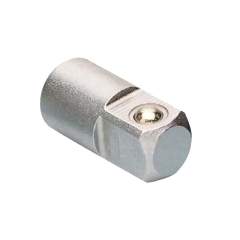
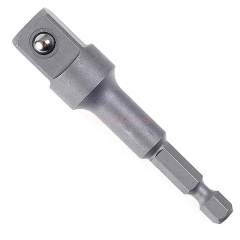
Proxxon industrial ratchets require no installation and connect directly to standard sockets through square drive interfaces conforming to ISO 3315 dimensional specifications. The 1/4 inch drive accepts sockets with 6.35mm square openings, 3/8 inch drives accommodate 9.525mm squares, and 1/2 inch drives fit 12.7mm socket openings with spring-loaded ball detent retention systems. Socket engagement depth requires minimum 8mm insertion for secure connection, while maximum extension length should not exceed 150mm to prevent excessive leverage that could damage the ratcheting mechanism. Compatibility extends to universal joints, extension bars, and adapters meeting the same ISO dimensional standards, ensuring seamless integration with existing socket sets and specialized attachments across different manufacturer systems.
What safety ratings and operating conditions apply to Proxxon industrial ratchets?
Proxxon industrial ratchets operate safely within temperature ranges from -10°C to +50°C for standard applications, with material expansion coefficients remaining stable across this spectrum to maintain precise tolerances. The tools carry no specific IP rating as mechanical hand tools but feature corrosion-resistant surface treatments suitable for industrial environments with humidity levels up to 85% relative humidity. Maximum safe working torque varies by drive size, with 1/4 inch drives rated for 25 Nm maximum, 3/8 inch drives handling up to 80 Nm, and 1/2 inch variants supporting 150 Nm before potential mechanism damage occurs. Proper safety protocols require regular inspection for worn pawls, cracked handles, and smooth ratcheting action to prevent sudden tool failure during high-torque applications.
What maintenance schedule and service life expectations apply to Proxxon industrial ratchets?
Proxxon industrial ratchets require monthly inspection of ratcheting mechanism smoothness, pawl engagement, and spring tension to maintain optimal performance in professional environments. Service life typically extends beyond 50,000 operating cycles under normal industrial conditions, with annual lubrication using light machine oil on pivot points and ratcheting components recommended for sustained operation. Critical inspection points include checking for handle cracks, drive square wear exceeding 0.1mm dimensional tolerance, and pawl teeth showing visible wear or chipping that could compromise engagement reliability. Professional reconditioning services can restore worn mechanisms, but replacement becomes necessary when drive squares exceed ISO 3315 tolerance limits or handle integrity becomes compromised, typically occurring after 5-7 years of intensive industrial use depending on application severity and maintenance consistency.