
What does a cubic metre of compressed air really cost?
Compressed air is the most expensive energy in a plant: up to 90 percent of a compressor's life-cycle cost is electricity. This guide shows how to calculate the real cost per cubic metre and where pressure reduction, leak repair and load management deliver the biggest savings.
View compressed air productsHow do you calculate the cost per cubic metre?
The real cost of compressed air comes not from the compressor price but from the electricity used over its service life. As a rule of thumb a compressor needs about 0.10 to 0.12 kWh per cubic metre of air at 7 bar. Multiplied by the electricity price this gives the cost rate per m³.
Example: 0.11 kWh/m³ at an electricity price of 0.25 €/kWh works out at roughly 0.0275 € per cubic metre. A single 3 mm leak at 7 bar loses about 27 m³ per hour - over a year of three-shift operation that quickly amounts to several thousand euros.
Lower the working pressure and fix leaks?
The two biggest levers are working pressure and leakage. Every bar of reduced pressure cuts electricity by about 6 to 8 percent. Many networks run needlessly at 8 bar even though the consumers are happy with 6 bar.
In poorly maintained systems leaks waste 20 to 30 percent of the air produced - air that costs money around the clock, including nights and weekends. Systematic leak management with ultrasonic detection and prompt repair usually pays for itself within a few months.
- Lower the working pressure step by step to the level actually required (often 6 instead of 8 bar).
- Locate leaks with an ultrasonic detector, tag them and repair by priority.
- Shut off the air at weekends and during breaks to avoid idle losses.
- Undersized or convoluted piping raises pressure drop - check the cross-section.
- Inspect quick couplings and hoses regularly for leaks.
How does load management save energy?
At part load, unregulated compressors waste a lot of energy: a screw compressor running idle still draws 25 to 35 percent of its rated power while delivering no air. A master controller and variable-speed drives match output to real demand.
A base-load and peak-load split makes sense: a variable-speed compressor covers the fluctuating peak while fixed-speed machines run the base load at their best efficiency. The waste heat can also support space heating or hot water.
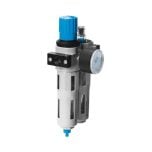 Air preparation units
Size filters, regulators and lubricators correctly and avoid pressure drop.
View products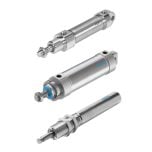
Frequently asked questions
What does a cubic metre of compressed air cost?
Depending on the electricity price and plant efficiency, usually 0.015 to 0.03 € per m³. Consumption is around 0.10 to 0.12 kWh per cubic metre at 7 bar.
How much does 1 bar less pressure save?
About 6 to 8 percent of electricity per bar. Dropping from 8 to 6.5 bar typically saves 10 to 12 percent, provided all consumers can still work.
How large is the loss from leaks?
In poorly maintained systems 20 to 30 percent of the air produced. This air costs electricity around the clock, even when nothing is being produced.
Is a variable-speed compressor worth it?
For fluctuating demand yes: it avoids costly idle time and can save 15 to 30 percent at part load. For constant base load a fixed-speed machine is often cheaper.
Want to cut compressed air costs?
From the air preparation unit to leak detection - we supply the components for an efficient, leak-free compressed air network.
Energy in focus
We highlight the biggest savings levers in the air network.
Tight, not costly
Components and tools for leak detection.
Properly regulated
Pressure control and management for every demand.
Selection help
We help you choose the right products; technical details are clarified with the manufacturer.