
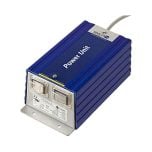
Surge Protection Type 1, 2 or 3 - Where to Install?
Surge protective devices (SPD) divert lightning and switching surges before they destroy sensitive electronics. This guide explains Types 1, 2 and 3 per IEC/EN 61643-11, the correct install point and how discharge capacity and the protection level Up work together.
View surge protectionWhat sets Type 1, Type 2 and Type 3 apart?
IEC/EN 61643‑11 divides surge protective devices into three types that differ in test current and install point. Type 1 handles the high-energy partial lightning current, Type 2 limits switching and residual surges and Type 3 protects the individual end device as fine protection.
Type 1 is tested with the 10/350 µs lightning impulse waveform and rated by its Iimp value in kiloamperes. Type 2 and Type 3 use the 8/20 µs surge waveform and are rated by nominal discharge current In and open-circuit voltage Uoc respectively.
Where in the installation does each type go?
The install point follows the lightning protection zone concept of IEC/EN 62305. Protection is staged from the service entrance to the end device so each stage further lowers the residual voltage of the one before.
- Type 1 at the building entrance in the main distribution board when an external lightning protection system (LPS) exists or an overhead line feeds in.
- Type 2 in the sub-distribution board as standard protection - required in many buildings per IEC 60364‑4‑44 and -5‑53.
- Type 3 directly ahead of sensitive loads such as IT, controllers or measuring equipment, no more than about 10 m of cable away.
- For cable runs longer than 10 m between stages, add a further arrester or a decoupling length.
How do discharge capacity and Up fit together?
Two figures drive the choice: the discharge capacity (how much surge current the SPD can survive) and the protection level Up (the residual voltage it lets through). High discharge capacity protects the SPD itself, a low Up protects the downstream electronics.
The protection level Up must stay below the rated impulse withstand voltage Uw of the equipment to be protected. Per IEC 60664‑1, end-device electronics of overvoltage category I typically have Uw = 1.5 kV, so Type 3 fine protection usually offers Up ≤ 1.5 kV.
- Higher discharge capacity means longer service life and more reserve across multiple lightning events.
- Lower Up gives better protection of sensitive electronics but requires coordination with upstream stages.
- Choose backup fuse and conductor cross-section per the datasheet, otherwise protection is reduced.
Frequently asked questions
Do I always need Type 1?
Type 1 is required when the building has an external lightning protection system or is fed by an overhead line. Without those risks a Type 2 arrester in the board plus Type 3 at the load usually suffices.
What does the protection level Up mean?
Up is the voltage the surge protective device still lets through while conducting. It must be lower than the rated impulse withstand voltage Uw of the protected equipment so its insulation is not exceeded.
Is one combined Type 1+2+3 device enough?
Combined Type 1+2 arresters are common and standards-compliant. Type 3 fine protection right at the sensitive load still makes sense when the cable to it is longer than about 10 m.
How often should an SPD be checked?
Many SPD carry an optical status indicator that flags a spent arrester cartridge. In addition, surge protection should be checked during the periodic installation inspection per IEC 60364‑6.
Selecting the right surge protection?
We supply Type 1, 2 and 3 arresters and combined units per IEC/EN 61643-11 - matched to system earthing, install point and protection level.
Standards-tested
Arresters per IEC/EN 61643-11 and IEC 60364-5-53.
Coordinated
Type 1, 2 and 3 energy-matched to each other.
Status indicator
Optical display flags spent cartridges.
Expert advice
We help with selection and install point.


