What are Bosch Rexroth cover profiles and what industrial applications do they serve?
Bosch Rexroth cover profiles are precision-engineered protective strips designed to enclose open grooves in structural aluminum profiles, providing both safety and aesthetic finishing for industrial workstation systems. These mechanical base elements serve critical applications in automotive assembly lines, electronics manufacturing clean rooms, pharmaceutical production facilities, and general industrial automation where profile systems require protection from contamination, debris ingress, or personnel contact with internal mechanisms. Available in groove sizes N6, N8, and N10 with standard 2000mm lengths, these profiles integrate seamlessly with Bosch Rexroth's modular construction system to maintain system integrity while enabling rapid reconfiguration of workstation layouts.
How do I select the correct Bosch Rexroth cover profile for my specific groove size and application requirements?
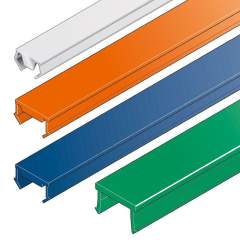
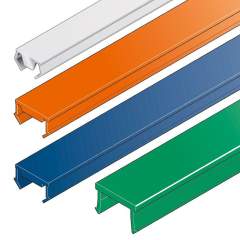
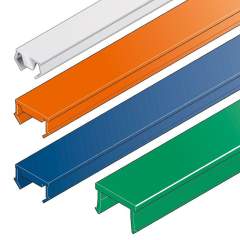
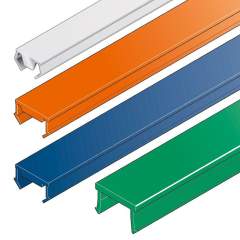
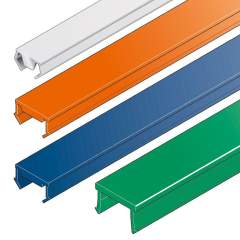
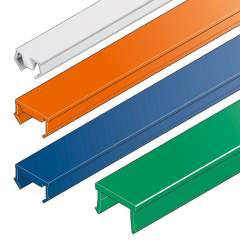
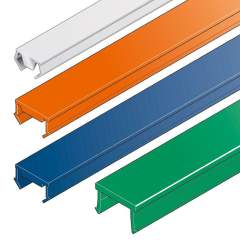
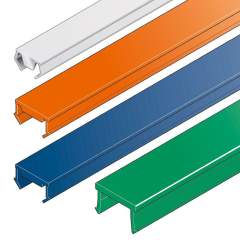
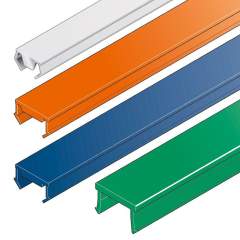
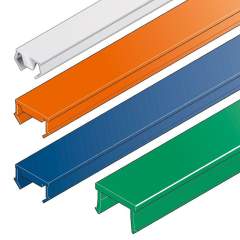
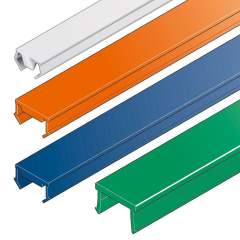
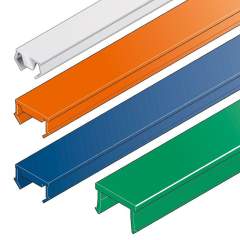
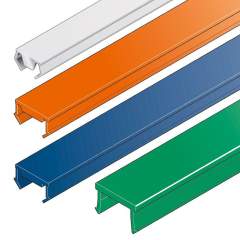
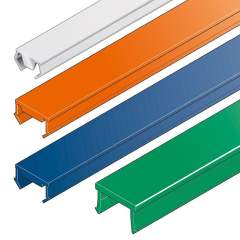
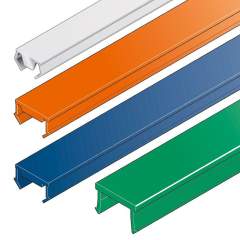
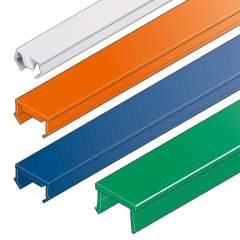
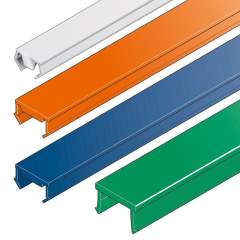
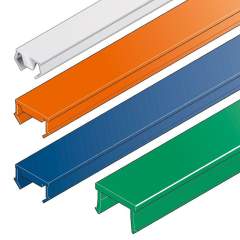
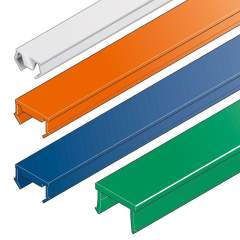
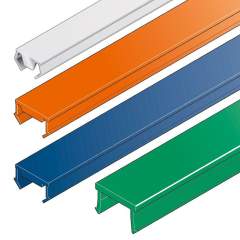
Cover profile selection depends primarily on the groove size designation of your existing structural profiles, with N6, N8, and N10 sizes corresponding to 6mm, 8mm, and 10mm groove widths respectively. Material selection between aluminum (AL), PVC, and specialized variants affects chemical resistance and ESD properties, with the 3842548879 ESD-rated black profile providing surface resistivity compliance for electronics applications. Color coding enables visual identification of different circuits or safety zones, with options including standard light grey, transparent for internal visibility, and safety colors like red (3842518368), yellow (3842518369), and orange (3842538957) for hazard marking. Length requirements typically use standard 2000mm sections that can be field-cut to exact dimensions, with 10-meter rolls available for continuous installations like the 3842555268 variant.
Which industrial standards and certifications apply to Bosch Rexroth cover profiles for workplace safety compliance?
Bosch Rexroth cover profiles comply with DIN EN 1090 structural metalwork standards for aluminum components and ISO 14122 safety requirements for permanent means of access to machinery where profile systems form walkways or platforms. ESD-rated variants like the 3842548879 black profile meet IEC 61340-5-1 electrostatic discharge control standards with surface resistivity between 10^6 and 10^9 ohms per square, essential for electronics manufacturing environments. The aluminum profiles conform to DIN EN 573 alloy specifications for structural applications, while PVC variants comply with RoHS directive 2011/65/EU for restricted substance compliance in industrial equipment. Fire resistance properties follow UL 94 flammability classification where applicable, ensuring safe integration into automated production systems subject to machinery directive 2006/42/EC requirements.
What are the key differences between aluminum, PVC, and ESD-rated cover profile variants offered by Bosch Rexroth?
Aluminum profiles like the 3842523254 N6 AL variant provide maximum mechanical strength and heat dissipation with operating temperatures from -40°C to +80°C, making them ideal for high-stress applications and welding stations. Standard PVC profiles such as the 3842549877 N8 H-PVC offer chemical resistance to cleaning agents and cost-effective protection with flexibility for curved installations, though limited to +60°C maximum operating temperature. ESD-rated profiles like the 3842548879 black variant incorporate conductive additives to maintain 10^6 to 10^9 ohm surface resistivity for static charge dissipation in electronics assembly areas. Transparent profiles enable visual inspection of internal wiring or pneumatic lines without removal, while colored variants provide safety coding with red indicating emergency circuits, yellow for caution zones, and green for normal operation according to ISO 3864 safety color standards.
What installation requirements and system compatibility considerations apply when integrating Bosch Rexroth cover profiles?
Cover profiles install via precision press-fit engagement into the T-slot groove system without requiring additional fasteners, with installation force typically 2-4N per linear centimeter depending on profile size and material hardness. System compatibility requires exact groove size matching, with N6 profiles exclusively fitting 6mm grooves and N10 profiles designed for 10mm structural profile systems from the Bosch Rexroth modular construction platform. Corner connections utilize 90-degree miter cuts with optional corner connectors for continuous coverage around profile intersections, while end caps prevent moisture ingress and provide finished appearance. Installation tools include standard groove cleaning brushes and profile cutting saws with carbide blades for aluminum variants, with recommended cutting speeds of 3000-4000 RPM to prevent material deformation during field modifications.
What safety ratings and environmental operating limits define the performance envelope of Bosch Rexroth cover profiles?
Bosch Rexroth aluminum cover profiles operate reliably from -40°C to +80°C ambient temperature range with UV stability meeting ISO 4892-2 weathering standards for outdoor installations, while PVC variants are limited to -20°C to +60°C continuous operation. IP20 finger protection rating prevents accidental contact with internal components when properly installed, though the profiles themselves do not provide moisture sealing beyond basic splash protection. ESD variants maintain their 10^6 to 10^9 ohm surface resistivity across the full temperature range with humidity tolerance from 10% to 85% RH non-condensing according to IEC 61340-5-1 testing protocols. Mechanical load capacity varies by profile size, with N10 aluminum profiles supporting up to 150N distributed load per meter length when properly supported by the underlying structural framework.
What maintenance requirements and service life expectations apply to Bosch Rexroth cover profiles in industrial environments?
Routine maintenance involves monthly visual inspection for cracks, discoloration, or loose fitting with semi-annual cleaning using isopropyl alcohol for ESD variants to maintain conductivity properties within the required 10^6 to 10^9 ohm range. Aluminum profiles typically provide 15-20 years service life in standard industrial environments, while PVC variants may require replacement after 8-12 years due to UV degradation and plasticizer migration in high-temperature applications above +50°C continuous operation. Replacement procedures involve simple pull-out removal from the T-slot groove followed by new profile press-fit installation, with no system shutdown required for individual profile replacement. Annual torque verification of associated profile connections ensures maintained structural integrity, with documentation requirements following ISO 9001 quality management standards for critical safety applications in automated production systems.